
2026-04-20 · specialty, shopping
Updated: 2026-10-21
By InsuraFAQ Editorial Team · Reviewed for accuracy
Best Pet Insurance Companies
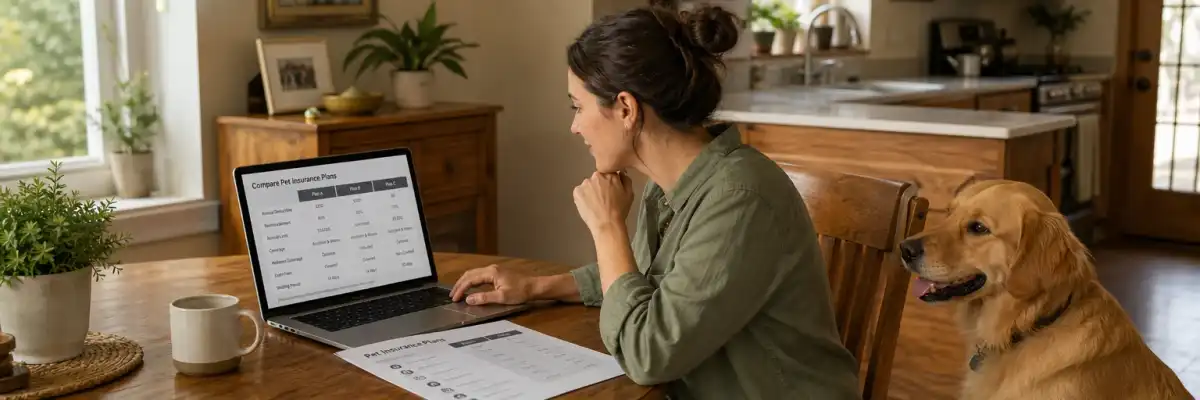
There is no single best pet insurer for every animal or household. The useful comparison is a side-by-side review of the policy you can actually buy: covered conditions, exclusions, deductible, reimbursement level, limit, waiting period, and price. This guide is educational, not a carrier ranking or endorsement.
At a glance
Pet insurance providers can offer different plan designs, reimbursement percentages, deductibles, waiting periods, and coverage caps. Comparing policy terms matters more than comparing a headline price alone.
- Compare the same inputs: Use the same pet, coverage limit, deductible, and reimbursement setting in every quote.
- Read exclusions and waiting periods: A policy may not cover a condition present before coverage starts, and waiting periods can vary.
- Confirm the claims process: Ask how claims are paid, what records are needed, and whether a payment option is available at your veterinarian.
- Check state-specific documents: Availability and policy wording can vary by state.
Key takeaways
- Compare policy terms rather than relying on a carrier name or a headline price.
- Read the definition of pre-existing conditions and the waiting-period language before purchasing.
- Confirm the deductible, reimbursement method, coverage limit, and claim documentation requirements in writing.
Start with the policy, not a shortlist
A carrier name, a promotional price, or a review score cannot tell you what your own policy will cover. Start by narrowing the comparison to plans available for your pet’s species, breed, age, location, and health history. Then request quotes using the same inputs for every plan: the same pet, ZIP code, annual limit, deductible, and reimbursement setting.
The Washington State Office of the Insurance Commissioner explains that pet insurance is regulated as property insurance in Washington. It also advises consumers to read the policy, including exclusions and waiting periods. State rules and the documents available to shoppers can differ, so use your own state’s disclosures and the insurer’s current policy materials rather than treating one state’s guidance as nationwide.
How to compare pet insurance companies
Use each insurer’s current quote and policy documents to compare the same set of questions. The Washington State Office of the Insurance Commissioner explains that pet insurance is regulated as property insurance in Washington and advises consumers to review policy terms carefully; rules and disclosures differ elsewhere.
| Compare | What to verify in the policy |
|---|---|
| Covered treatment | Which accidents, illnesses, diagnostics, prescriptions, and exam fees are included or excluded? Do not assume optional items are included. |
| Pre-existing conditions | How does the insurer define a pre-existing condition, and how are recurring or bilateral conditions handled? |
| Cost sharing | Is the deductible annual, per condition, or another structure? What reimbursement percentage applies after it? |
| Limit | Is there an annual, per-condition, lifetime, or other payment limit? |
| Timing | When does coverage begin, and are there separate waiting periods for specific conditions? |
| Claims | What records are required, what is the stated claims timeline, and are any payment options available at your veterinarian? |
Plan details, pricing, and availability can change and may vary by state. We do not rank providers or recommend one over another. A plan that looks inexpensive can have a different deductible, reimbursement percentage, limit, or excluded treatment than the plan beside it. The best fit depends on your pet’s health history, budget, and the policy terms you can confirm. For a repeatable shopping process, see how to compare insurance quotes.
Read exclusions and timing before enrolling
Ask for the full policy or specimen policy before you purchase. The NAIC’s Pet Insurance Model Act includes disclosure concepts for preexisting conditions, waiting periods, deductibles, reimbursement percentages, and limits. That model is not itself the rule in every state, but it is a useful checklist for questions a shopper should be able to answer from the documents.
In particular, read how the policy defines a pre-existing condition, whether it treats recurring or bilateral conditions specially, and when coverage starts. Do not rely on a salesperson’s summary when the policy language says something different. If a term is unclear, ask the insurer to identify the applicable policy section in writing before enrolling.
Compare the out-of-pocket cost, not just the premium
Your premium is only one part of the cost. A deductible is the amount you pay before the plan begins reimbursing covered expenses under its terms. After that, reimbursement is commonly expressed as a percentage, but the policy controls what expenses qualify and how the calculation works. A lower premium may come with a higher deductible, a lower reimbursement percentage, a smaller limit, or more out-of-pocket exposure when your pet needs care.
For each quote, write down the monthly premium, deductible structure, reimbursement percentage, annual or other limit, and treatment exclusions. Then consider whether you could cover the deductible and any non-covered care from savings. Our pet insurance cost guide can help frame the questions to ask; it is not a promise of what any plan will cost.
A practical comparison worksheet
Before choosing a plan, save the quote and policy documents for each finalist and answer these questions:
- What exact accidents, illnesses, diagnostics, prescriptions, exam fees, and therapies are covered or excluded?
- How does the policy define pre-existing conditions, and what records might the insurer request?
- Is the deductible annual, per condition, or structured another way?
- What reimbursement percentage and payment limit apply after the deductible?
- When does coverage begin, and do different conditions have different waiting periods?
- What is the cancellation, renewal, and claims process in your state?
If two plans cannot be compared using the same answers, they are not yet comparable. Keep copies of the policy, declarations or confirmation materials, and the quote settings you used. Those records make it easier to spot a changed option before you enroll.
Next steps
Get quotes from several providers using the same pet details and coverage settings. Read the specimen policy, exclusions, and state-specific disclosures before purchasing. If your pet has an existing or prior condition, ask the insurer how its definition applies; only the insurer can interpret its policy for a particular application.
- Pet Coverage Overview for a broader look at policy questions and exclusions.
- How Much Does Pet Insurance Cost? for cost questions.